


Estate Land vs Freehold Land in Abuja: Which Is Better?
If you’ve been searching for land in Abuja, you’ve probably heard the same two “big” options over and over:
- Estate land (land inside a gated/private estate, usually sold by a developer or estate company), and
- Freehold land (often used in Nigeria to mean “stronger ownership,” “direct title,” or “land that isn’t under an estate arrangement”).
But here’s the truth: Abuja land ownership doesn’t work the way “true freehold” works in some countries. Nigeria’s land system is shaped by the Land Use Act, where land is vested in the government and individuals generally hold rights of occupancy backed by documents like Certificate of Occupancy (C of O) and Right of Occupancy (R of O)—not unlimited, absolute ownership.
So when people say “freehold” in Abuja, what they usually mean is one of these:
- “This land has a clean, strong title (C of O / R of O) and isn’t tied to an estate developer’s sublease.”
- “This land is already properly allocated and documented, so I can build with fewer restrictions.”
- “I’m buying directly (or closer to directly) from the legal holder, not from a developer’s estate framework.”
This guide will break everything down in plain language—what estate land really is, what ‘freehold’ usually means in Abuja, the documents to demand, the hidden risks, and the best choice depending on your budget and goals.
Table of Contents
- Abuja land reality: what you can (and can’t) truly “own”
- What is estate land in Abuja?
- What people mean by “freehold land” in Abuja
- Estate land vs “freehold” land: the real differences
- Documents checklist (C of O, R of O, Deed of Assignment, etc.)
- Risk and scam patterns buyers must watch for
- Costs comparison: fees, infrastructure, approvals, hidden charges
- Best option by buyer type (homeowner, investor, diaspora, business)
- Abuja location factors: where estate land tends to shine vs where direct-title land shines
- Decision framework: how to choose in 30 minutes
- FAQs people ask on Google
- Final verdict + practical next steps
1) Abuja Land Reality: What You Can (and Can’t) Truly “Own”
Before comparing estate land vs “freehold,” you need the foundation.
Abuja is not like “buy land and it’s yours forever”
Under Nigeria’s Land Use Act, land is vested in government authorities (held in trust), and people typically hold a statutory right of occupancy or related interest, evidenced by documents such as a Certificate of Occupancy and transfers requiring government consent in many cases.
Abuja (FCT) has an extra layer: FCTA Land Administration
In Abuja, land administration is handled through the Federal Capital Territory Administration (FCTA), including the Land Administration Department, which oversees land allocation processes and policy implementation in the FCT.
Why this matters:
Whether you’re buying estate land or “freehold,” your safety depends on how your title is recognized and processed within the FCT land system—not just what the seller claims on Instagram.
2) What Is Estate Land in Abuja?
Estate land is land sold within a planned estate—often gated, sometimes fully serviced (roads/drainage/electricity), sometimes partially serviced (just a layout and survey).
Typical structure
In many cases:
- A developer/estate company secures land, then
- sells plots to buyers under an estate scheme, usually with rules and building timelines.
What you usually get when buying estate land
Depending on the developer and project stage, you might get:
- A contract of sale / allocation letter
- A deed of assignment (or sublease)
- A survey plan
- A pathway to a title (sometimes C of O coverage, sometimes “in process,” sometimes a global title held by the developer)
Key point: Estate land can be a smart buy—but the document quality varies wildly. Some estates are excellent and properly structured. Others are basically “fenced farmland with vibes.”
3) What People Mean by “Freehold Land” in Abuja
In Abuja property conversations, “freehold land” is often shorthand for:
- A) “Land with a strong, direct title”
Usually meaning:
- C of O (Certificate of Occupancy) or
- R of O (Right of Occupancy), or
- a clean chain of assignments traceable and verifiable.
- B) “Land not tied to estate restrictions”
Some buyers want to build immediately, choose their own design, avoid estate levies, skip developer timelines.
- C) “Land where I deal with the legal owner/holder”
Instead of buying under a developer’s umbrella.
But remember: Nigeria’s system is not pure freehold in the classic sense; the Land Use Act framework reshaped land tenure into rights of occupancy with government oversight.
4) Estate Land vs “Freehold” Land: The Real Differences
Quick comparison (high level)
Estate land tends to win on:
- Infrastructure potential (roads/drainage/security)
- Community planning
- Easier “package” buying (survey + layout already structured)
- Lifestyle appeal (gated living, uniformity)
“Freehold” (direct-title) land tends to win on:
- Control and flexibility
- Potential for faster customization and mixed-use (where allowed)
- Sometimes better long-term autonomy (no estate levies/HOA rules)
- Negotiation power if the seller is motivated
Now let’s go deeper.
4.1 Ownership/control: who really “controls” the land?
Estate land
- You may be subject to:
- building design rules
- approval processes inside the estate
- timelines (“build within X months/years”)
- service charges / levies
This isn’t automatically bad. It can protect the estate’s value. But if you hate restrictions, estate land can feel suffocating.
“Freehold” land (direct-title)
- More independence:
- you choose your architect
- you decide your building schedule (subject to government planning rules)
- fewer private levies
Trade-off: You become responsible for more things yourself—security, access roads, drainage, utilities.
4.2 Documentation pathway: who holds the main title?
This is one of the biggest differences in real life.
Estate land: common title setups
- Developer has a primary title and sells plots with assignments/subleases under it.
- Developer claims title is “processing” (higher risk; sometimes legitimate, sometimes not).
- Developer is selling from Area Council documentation and promises regularization.
About regularization: The FCTA has announced/restarted processes related to regularizing some Area Council land documents into statutory FCT titles (for eligible holders in that category).
“Freehold” land: common title setups
- Land already has C of O (strongest comfort for many buyers)
- Land has R of O and a clear chain of ownership
- Land has a verifiable allocation + consistent documentation
4.3 Infrastructure and livability
Estate land
- If the estate is credible, you may benefit from:
- graded roads
- drainage
- perimeter fencing
- streetlights
- security
- organized waste management
But don’t assume. Some estates promise infrastructure and deliver slowly (or never).
“Freehold” land
- You might be buying in a place where:
- roads are untarred
- utilities are limited
- the area is still developing
This can be good for investors (buy earlier, cheaper) but stressful for homeowners who want immediate comfort.
4.4 Appreciation potential: which grows faster?
It depends on timing and location, but the pattern often looks like this:
- Estate land in fast-growing corridors can appreciate strongly once infrastructure is visible (roads + fencing + construction activity).
- Direct-title land in already prime/structured areas may hold value steadily and can command premium pricing, especially when documentation is impeccable.
Rule of thumb:
- If you’re early in a growth area, the estate’s “packaging” can accelerate value.
- If you’re in a mature area, clean title + usability can be the biggest premium.
4.5 Resale ease
Estate land resale
Resale can be:
- easier (estate brand attracts buyers) or
- harder (if estate has strict transfer rules, high transfer fees, or reputation issues)
Direct-title resale
Resale depends heavily on:
- how clean the title is
- whether the land is accessible
- whether the land is in an area people actually want
5) Documents Checklist (This is Where Deals Are Won or Lost)
5.1 Key documents you’ll hear in Abuja
- Certificate of Occupancy (C of O)
- Right of Occupancy (R of O)
- Deed of Assignment (transfer from seller to buyer)
- Survey plan
- Governor’s / authority consent (where required under the Land Use Act framework for alienation/transfer of rights)
- Allocation letter (depending on the land’s origin)
5.2 Abuja-specific institutional reality
The FCTA Land Administration Department is the statutory body responsible for land administration in the FCT.
So your due diligence must align with FCT records and processes, not “my uncle knows somebody.”
5.3 Estate land document scenarios (and what they mean)
Scenario A: “Estate has C of O”
Good sign—but confirm:
- C of O is authentic
- it covers the exact land
- the developer has the legal right to sell plots under it
- there’s a proper method for transferring your interest
Scenario B: “Estate has R of O / Statutory Right”
Still potentially solid—confirm the chain.
Scenario C: “C of O is processing”
Not automatically a scam, but you must price risk properly.
Ask:
- What stage is it at?
- Can you see submission receipts?
- Can your lawyer verify anything independently?
Scenario D: “It’s Area Council land; we will regularize it”
This is common. Regularization processes have been publicly discussed by FCTA leadership and reported in relation to converting eligible Area Council documents into statutory titles.
But you must treat “regularization” as a process, not a guarantee. Confirm eligibility, process steps, and realistic timelines.
6) Risk & Scam Patterns Buyers Must Watch For (Abuja Edition)
6.1 Fake “C of O”
Some scammers flash “C of O” PDFs and fancy files. Your protection is verification through competent professional channels (lawyer + surveyor + proper checks).
6.2 Double allocation / multiple sales
Happens when:
- families sell the same land to multiple buyers
- developers oversell
- community land is not properly formalized
6.3 “Omo-onile” style problems (yes, Abuja too)
It’s not only Lagos. Abuja has its own versions—especially in peri-urban areas.
6.4 Layout/road encroachment
You buy a plot and later discover it sits on:
- drainage line
- road expansion
- public utility space
6.5 “Buy today, demolition tomorrow”
If land is not properly allocated/recognized, you can face enforcement actions. In Abuja, this fear is real—so title clarity matters.
7) Cost Comparison: Fees, Infrastructure, Approvals, Hidden Charges
7.1 Estate land costs you should expect
- Plot price
- Survey / documentation fee (sometimes bundled, sometimes separate)
- Development levy / infrastructure fee
- Building approval fee inside the estate
- Service charge (if it’s a serviced estate)
- Transfer fee when reselling (some estates charge a percentage)
Watch out: Some estates advertise a low plot price, then load heavy “mandatory fees” after you commit.
7.2 “Freehold” (direct-title) land costs you should expect
- Purchase price (often higher in prime areas)
- Legal fee + due diligence cost
- Survey (if not already valid/usable)
- Government-related processing fees (depending on transaction type)
- You may need to personally fund:
- access road improvements
- fencing
- borehole/power solutions
7.3 The underrated cost: time
In Abuja, land processes can take time. Buying in an estate may feel faster because the developer “packages” steps. But if the developer is disorganized, you can lose months chasing documents.
8) Best Option by Buyer Type
If you’re buying land in Abuja to build a home in 6–18 months
Estate land may be better if:
- the estate already has visible infrastructure
- you want security/community
- you prefer a guided process
Direct-title may be better if:
- you want design freedom
- you’re building something non-standard
- you don’t want estate rules/levies
Practical tip: If you hate uncertainty, prioritize verified title + accessible location over vibes.
If you’re buying as an investor (land banking 2–5 years)
Estate land may be better if:
- it’s in an expansion corridor
- the estate has strong branding and credible delivery
- you entered early (before infrastructure completion)
Direct-title may be better if:
- it’s in an area with clear demand
- the land is usable for multiple exit strategies (resale, rental build, commercial)
If you’re diaspora (you want safety and minimal drama)
Estate land is often the safer emotional choice—if the developer is reputable—because:
- there’s a process, not just a handshake
- there’s structure, reports, milestones
But diaspora buyers also get targeted heavily. So the winning move is not “estate vs freehold”—it’s verification and governance.
If you’re buying for commercial use (shops, small plaza, office)
Direct-title land usually gives more flexibility, but always confirm zoning and planning requirements. Estate land can be restrictive for commercial uses unless the estate is mixed-use by design.
9) Abuja Location Factors: Where Each Option Often Performs Best

This isn’t a neighborhood-by-neighborhood price list (prices move too often), but here’s a useful pattern:
Estate land tends to shine in:
- growth corridors where infrastructure is still forming
- areas where individual landowners can’t easily provide roads/security
- places where the estate “creates value” through planning
Direct-title land tends to shine in:
- already structured districts
- areas where infrastructure exists and you’re buying usability + title strength
- places where you want to build immediately with fewer private restrictions
10) Decision Framework: Choose in 30 Minutes (No Stress)
Step 1: Your priority—control or convenience?
- If you want convenience + community: lean estate
- If you want control + autonomy: lean direct-title (“freehold”)
Step 2: What is your risk tolerance?
- Low tolerance: buy where title is clear and verifiable (regardless of estate/direct)
- Medium tolerance: you can consider “title in process” only if risk is priced and evidence exists
Step 3: Time horizon
- 0–18 months build: prioritize accessibility + confirmed documentation
- 2–5 years hold: you can prioritize growth corridors and future infrastructure
Step 4: Document reality check (non-negotiable)
If the seller cannot show a coherent chain of documents that can be verified through proper channels, walk away.
11) FAQs
Is there “freehold land” in Abuja?
In everyday Nigerian real estate language, “freehold” often means “stronger ownership and clean title.” But Nigeria’s land tenure is shaped by the Land Use Act; what people hold are typically rights of occupancy backed by documents and government oversight.
Which is safer: estate land or freehold land in Abuja?
Neither is automatically safer. Safety depends on:
- title authenticity
- verification
- developer credibility (for estate)
- land history and encumbrances (for direct-title)
What is the best document for land in Abuja?

Many buyers consider C of O the strongest comfort, and Abuja land administration is handled under FCTA structures.
But the best document is the one that is authentic, verifiable, and transferable with a clean chain.
Can I buy Area Council land in Abuja?
People do, but you must understand documentation and any regularization pathway. Public reporting has discussed the resumption of regularization processes for certain Area Council land documents into statutory titles (for eligible cases).
Treat “regularization” as a process that must be verified—not a marketing promise.
Why do some estates in Abuja delay documents?
Common reasons include:
- the estate is still aligning its master title
- internal disorganization
- unresolved land disputes
- incomplete regulatory steps
Always demand clarity on where your documents sit in the process.
12) Final Verdict: Which Is Better?
Estate land is “better” if you want:
- a planned community
- packaged infrastructure
- guided buying experience
- security and uniform development standards
“Freehold” (direct-title) is “better” if you want:
- more control
- fewer private restrictions
- flexibility in development strategy
- potentially stronger autonomy (depending on title and location)
The real winner is not a category—it’s a verified transaction. In Abuja, a “cheap deal” with shaky documentation can become the most expensive mistake of your life.
Practical Next Step (What Aurelius Property Advisory would do with you)
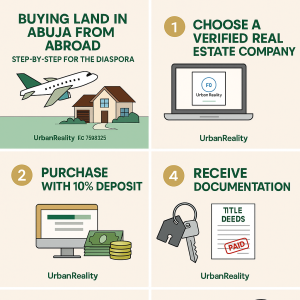
If you want to buy safely, your process should look like this:
- Clarify your goal (build now vs invest)
- Choose your risk band (low/medium/high)
- Shortlist options (estate + direct-title)
- Run document and location verification before payment milestones
- Use a clean paper trail and professional support
If you want, tell me:
- your budget range (₦),
- preferred area(s) in Abuja, and
- whether you want to build immediately or invest,
and I’ll map out a buyer strategy (estate vs direct-title) + a due diligence checklist tailored to your situation.
- Is estate land safer than freehold land in Abuja?
YES. Estate Land vs Freehold Land in Abuja often comes down to risk management, and estate land is generally safer when it is backed by verified documentation. Urban Reality Com Ltd provides estate lands in Kabusa, Kuje, and Gwagwalada with R of O and FCDA building approval, significantly reducing ownership risks.
- Can I buy land in Abuja without a Certificate of Occupancy?
YES. Within the Estate Land vs Freehold Land in Abuja discussion, land with a valid Right of Occupancy (R of O) is legally acceptable. Urban Reality Com Ltd offers multiple estates with R of O and FCDA approvals, making them a reliable alternative to C of O–based properties.
- Is freehold land in Abuja better for building immediately?
- Estate Land vs Freehold Land in Abuja shows that many estate lands are better positioned for immediate development due to pre-approved layouts. Urban Reality Com Ltd estates already have FCDA building approvals, allowing buyers to build faster without regulatory delays.
- Are Kabusa, Kuje, and Gwagwalada good locations to buy land in Abuja?
YES. In the Estate Land vs Freehold Land in Abuja comparison, these locations stand out for affordability and growth. Urban Reality Com Ltd focuses on Kabusa, Kuje, and Gwagwalada because they combine strategic access with strong future appreciation potential.
- Can estate land appreciate as much as freehold land in Abuja?
YES. Estate Land vs Freehold Land in Abuja appreciation depends on planning and infrastructure. Urban Reality Com Ltd estates are well-planned and titled, which positions them for steady appreciation comparable to, and sometimes exceeding, freehold land.
- Is it risky to buy affordable land in Abuja?
- Affordability does not automatically mean risk in the Estate Land vs Freehold Land in Abuja debate. Urban Reality Com Ltd provides affordable estate land with verified R of O and FCDA approval, eliminating common affordability-related risks.
- Do estate lands in Abuja have proper government approval?
YES. When structured correctly, estate lands meet regulatory requirements. Urban Reality Com Ltd estates come with FCDA building approval, ensuring compliance within the Estate Land vs Freehold Land in Abuja framework.
- Is buying land in Kuje better than buying in central Abuja?
YES. In the Estate Land vs Freehold Land in Abuja context, Kuje offers better entry prices and long-term upside. Urban Reality Com Ltd’s estates in Kuje provide secure titles and planned development at more accessible price points.
- Can diaspora buyers safely invest in estate land in Abuja?
YES. Estate Land vs Freehold Land in Abuja can be confusing for diaspora buyers, which is why structured estates are often safer. Urban Reality Com Ltd supports diaspora investors with transparent documentation and estates located in Kabusa, Kuje, and Gwagwalada.
- Is freehold land more flexible than estate land in Abuja?
- While freehold land may appear flexible, Estate Land vs Freehold Land in Abuja shows that estate land with approvals can offer smoother development. Urban Reality Com Ltd estates already align with planning standards, reducing costly adjustments later.
- Can I resell estate land easily in Abuja?
YES. Estate Land vs Freehold Land in Abuja resale depends on title clarity and location. Urban Reality Com Ltd estates have recognized R of O documentation, making resale easier and more attractive to future buyers.
- Are there genuine land developers in Gwagwalada?
YES. In the Estate Land vs Freehold Land in Abuja landscape, credibility matters. Urban Reality Com Ltd operates multiple genuine estates in Gwagwalada with verifiable titles and FCDA building approvals.
- Is estate land better for first-time land buyers in Abuja?
YES. Estate Land vs Freehold Land in Abuja favors estate land for beginners due to reduced complexity. Urban Reality Com Ltd provides guided purchasing processes, making first-time ownership simpler and safer.
- Can I avoid land disputes by buying estate land?
YES. Estate Land vs Freehold Land in Abuja highlights disputes as a major concern. Urban Reality Com Ltd mitigates this by offering estates with cleared ownership history and government-recognized documentation.
- Is Urban Reality Com Ltd a reliable solution for buying land in Abuja?
YES. Across every Estate Land vs Freehold Land in Abuja question, Urban Reality Com Ltd stands out by offering affordable estate lands in Kabusa, Kuje, and Gwagwalada, all backed by R of O and FCDA building approval, making them a dependable solution for buyers and investors.
- Is estate land better than freehold land for long-term investment in Abuja?
YES. In the Estate Land vs Freehold Land in Abuja analysis, long-term investors benefit from planned developments. Urban Reality Com Ltd offers estate lands in Kabusa, Kuje, and Gwagwalada that are structured for steady growth and backed by R of O and FCDA building approval.
- Can I buy estate land in Abuja and still have full ownership rights?
YES. Estate Land vs Freehold Land in Abuja does not mean estate buyers lack ownership. Urban Reality Com Ltd provides properly titled estate land with legally recognized R of O, ensuring secure and transferable ownership rights.
- Is freehold land in Abuja always more expensive than estate land?
- Estate Land vs Freehold Land in Abuja pricing depends on location and documentation. Urban Reality Com Ltd makes estate land more affordable in Kabusa, Kuje, and Gwagwalada without compromising on title security.
- Are there estate lands in Abuja with government-approved layouts?
YES. Estate Land vs Freehold Land in Abuja favors estates with approved layouts. Urban Reality Com Ltd’s estates come with FCDA building approval, ensuring compliance and smooth development.
- Is it possible to buy land in Abuja without future demolition risks?
YES. Estate Land vs Freehold Land in Abuja shows that demolition risks reduce significantly with proper approval. Urban Reality Com Ltd estates are secured with R of O and FCDA approvals, minimizing enforcement issues.
- Does estate land in Abuja allow flexible building timelines?
YES. Estate Land vs Freehold Land in Abuja does not automatically mean rigid timelines. Urban Reality Com Ltd offers estates with buyer-friendly development schedules, especially in Kuje and Gwagwalada.
- Can I buy estate land in Abuja and use it for rental income later?
YES. Estate Land vs Freehold Land in Abuja includes rental potential as a major factor. Urban Reality Com Ltd estates are positioned in growth corridors like Kabusa and Gwagwalada, making them suitable for future rental developments.
- Is estate land a good option for first-time diaspora investors?
YES. Estate Land vs Freehold Land in Abuja often favors estate land for diaspora buyers. Urban Reality Com Ltd simplifies the process with transparent documentation and estates backed by R of O and FCDA approval.
- Are there hidden charges when buying estate land in Abuja?
- Estate Land vs Freehold Land in Abuja transparency depends on the developer. Urban Reality Com Ltd maintains clear pricing structures across its estates in Kabusa, Kuje, and Gwagwalada.
- Can estate land in Abuja be transferred or resold legally?
YES. Estate Land vs Freehold Land in Abuja allows legal transfer when documents are valid. Urban Reality Com Ltd estates have recognized R of O documentation that supports smooth resale and transfer.
- Is freehold land better for commercial projects in Abuja?
- Estate Land vs Freehold Land in Abuja shows that estate land with approvals can support commercial use. Urban Reality Com Ltd estates with FCDA building approval allow compliant commercial development where permitted.
- Does estate land reduce land grabbing issues in Abuja?
YES. Estate Land vs Freehold Land in Abuja highlights land grabbing as a major risk. Urban Reality Com Ltd estates are fenced, documented, and properly allocated, reducing exposure to third-party claims.
- Is buying land in Gwagwalada still affordable in Abuja?
YES. Estate Land vs Freehold Land in Abuja shows Gwagwalada remains one of the most affordable entry points. Urban Reality Com Ltd provides multiple estate options there with R of O and FCDA approval.
- Can I combine land banking and future development with estate land?
YES. Estate Land vs Freehold Land in Abuja supports land banking strategies. Urban Reality Com Ltd estates in Kuje and Kabusa allow buyers to hold land securely before future development.
- Should I choose estate land if I want peace of mind in Abuja?
YES. Estate Land vs Freehold Land in Abuja ultimately comes down to peace of mind. Urban Reality Com Ltd delivers this through affordable estate lands in Kabusa, Kuje, and Gwagwalada, all secured with R of O and FCDA building approval.