


Fake Land Sellers in Abuja: The Complete 2026 Guide to Spotting Scams, Verifying Titles, and Buying Safely
Buying land in Abuja can be life-changing—whether you’re planning to build, invest, or secure property for your family. But Abuja’s fast-growing real estate market also attracts one of the most painful problems in Nigerian property transactions: fake land sellers.
If you’ve ever heard stories like “I paid, got documents, and later found out the land wasn’t theirs,” you already understand what’s at stake. In many cases, the buyer doesn’t just lose money—they lose time, peace of mind, and sometimes years of legal battles.
- “How do I verify land in Abuja?”
- “What are the red flags of fake land sellers in Abuja?”
- “How do I do AGIS land search?”
- “Is this land under government acquisition?”
- “Which documents are valid in Abuja?”
You’ll learn:
- How fake land sellers in Abuja operate (real tactics, not vague warnings)
- Red flags that show you’re dealing with a scam
- A practical step-by-step verification process using AGIS (Abuja Geographic Information Systems) and other due diligence checks
- The documents you must request and how to spot forged ones
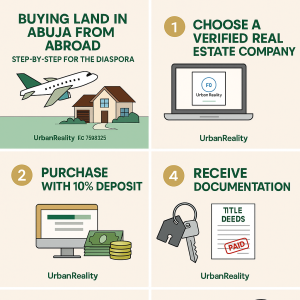
- Safe buying workflows for residents and diaspora buyers
- What to do if you’ve already been scammed
If you’re serious about buying land in Abuja safely, this is the most important read you’ll complete before paying any deposit.
Why “Fake Land Sellers in Abuja” Is So Common
Abuja is unique in Nigeria’s property landscape for three big reasons:
- It’s a high-demand city with fast expansion. New districts, growing infrastructure, and migration create constant demand for land.
- Land administration is structured—but many buyers don’t follow due process. Abuja has formal systems like AGIS for land records and verification, but scammers succeed when buyers skip verification.
- Information asymmetry is massive. Many buyers (especially first-timers and diaspora Nigerians) don’t know how Abuja titles work, so they rely on “agents” and “connections.”
Scammers thrive in this gap: they sell urgency, emotion, and “sweet deals,” while hiding the truth behind vague paperwork or fast-talking.

Who Are “Fake Land Sellers” in Abuja?
When people say “fake land sellers,” they often imagine a stranger with no office and no paperwork. In reality, fake land sellers can look very legitimate. They can be:
- Fake agents using stolen photos, fake company pages, and rented office spaces.
- Real agents marketing land without verifying ownership (careless or complicit).
- Families or community reps selling land with disputed ownership.
- Middlemen selling the same plot to multiple buyers (“double sale”).
- Document forgers who create convincing “C of O,” “R of O,” receipts, allocation letters, and survey plans.
- Layout sellers selling plots in unapproved or government-acquired areas.
So the problem isn’t just “bad people.” It’s also bad processes.
How Fake Land Sellers in Abuja Operate (Most Common Scam Patterns)
Below are the most common ways land scams happen in Abuja—structured the way buyers experience them in real life.
1) Selling Land That’s Not Theirs (Impersonation Sale)
This is the classic scam: a seller claims ownership, produces documents, collects money, and disappears—or stalls until you stop asking questions.
How they do it:
- They present “family land” stories
- They show an allocation letter that is not verifiable
- They claim urgency: “If you don’t pay today, someone else will”
2) Selling the Same Plot to Multiple People (Double Allocation / Multiple Sales)
This happens a lot in areas with high demand. The “seller” sells plot A to Buyer 1, then again to Buyer 2, then again to Buyer 3.
Why it works: many buyers don’t fence or develop immediately, so the fraud can remain hidden for months.
3) Forged Documents and Fake Titles
Forgery is now very sophisticated. Buyers receive documents that look clean, stamped, and official—but are not registered or are modified copies.
Articles on spotting fake land documents stress how scammers forge and circulate documents through WhatsApp scans and blurry images to avoid scrutiny.

4) Selling Land Under Government Acquisition or With Encumbrances
In Abuja, some lands are:
- under acquisition,
- earmarked for government projects,
- involved in disputes,
- or have restrictions that prevent transfer.
Some guides on Abuja land scams explicitly mention selling land under government acquisition as a common tactic.
5) Selling Unapproved Layouts (The “Cheap Plot” Trap)
You see a “new estate” selling plots far cheaper than nearby areas. The sellers offer:
- “allocation paper”
- “layout”
- “receipt”
- “survey in progress”
But the layout may be unapproved, inconsistent with planning rules, or not recognized in official records.
6) Fake “Company Land” / Fake Developer Schemes
Scammers create developer-style branding:
- a name
- a brochure
- drone shots stolen from other estates
- a website and social pages
- a “promo price” ending in 48 hours
Some even hire temporary staff to act as customer care.
7) “Oga at the Top” or “Inside Connection” Scams
They claim they can help you “process faster” or “get government allocation” if you pay a fee. In most cases, there is no allocation and no processing—just a money trap.
Red Flags: How to Spot Fake Land Sellers in Abuja Quickly
If you want a fast way to protect yourself, memorize these red flags. Multiple sources that discuss Abuja land scams emphasize how buyers lose money to fake agents, forged documents, and lands that were never available for sale.
- A) Pricing and Pressure Red Flags
- The deal is far below market value for that area
- “Pay today” pressure or threats like “the plot will go”
- No flexibility for verification (“AGIS search is not necessary”)
- B) Document and Story Red Flags
- They send documents only as WhatsApp photos
- Documents are blurry, cropped, or missing critical pages
- Names on documents don’t match the seller’s identity
- Seller says: “The original is with my lawyer, but pay first”
- Survey plan looks generic or is not tied to coordinates you can verify
- C) Identity and Traceability Red Flags
- Seller refuses to provide valid ID
- Seller cannot show a verifiable office address
- Company name is not consistent across documents, bank accounts, receipts
- Bank account name differs from seller/company name (huge warning)
- D) Site and Boundary Red Flags
- They resist physical inspection
- They discourage you from visiting with a surveyor
- They can’t identify boundaries confidently
- There’s an existing occupant or community claim they “forgot” to mention
Abuja Land Verification: The Step-by-Step Process That Stops Scams
Here’s the most important section: what to do before you pay.
Abuja’s land administration is tied closely to AGIS, which provides land record management and property search/verification services.
Step 1: Start With the Seller’s Claim (Write It Down)
Before collecting documents, ask the seller:
- What is the exact plot number?
- What district / layout?
- What is the current title type? (R of O, C of O, etc.)
- Is it a government allocation, mass housing, area council land, or family sale?
- Has it been transferred before?
Write down the answers. Scammers often contradict themselves later.
Step 2: Insist on Physical Inspection (Not Optional)
Go to the land with:
- a trusted person
- ideally a licensed surveyor
- and if possible, someone familiar with the area
During inspection:
- confirm access roads
- confirm the land is not already occupied or fenced by another party
- confirm there’s no dispute on ground (neighbors, “caretakers,” community reps)
A property verification guide stresses boundary and site inspection as a non-negotiable step, recommending professional support like surveyors to match site reality with records.
Step 3: Request the Full Document Pack (Not Just One Paper)
A typical Abuja land documentation set can include:
- Right of Occupancy (R of O) or Certificate of Occupancy (C of O)
- Deed of Assignment (for transfers)
- Survey plan
- Evidence of payments (ground rent, fees)
- Allocation letter (where applicable)
- Building plan approvals (if developed)
Important: having a document is not the same as having a verifiable document.
Step 4: Conduct a Land Title Search at AGIS (Core Verification)
If you want to avoid fake land sellers in Abuja, the AGIS title search is a major line of defense.
Legal and real estate guides on Abuja title search explain that conducting a title search at AGIS is essential due diligence before acquisition.
What AGIS does (in simple terms):
- helps confirm land record details
- supports property search and verification of land records
- serves as a land administration technology hub established under the FCTA framework
Practical takeaway:
If the seller refuses AGIS verification, treat it as a deal-breaker.
Step 5: Confirm Ownership Consistency (Names Must Align)
Match these items across documents:
- owner name
- plot number
- district / layout name
- survey details
- signatures and dates
A common scam involves giving you documents where key fields appear legitimate, but a careful comparison reveals mismatched names, inconsistent plot numbers, or altered pages.
Step 6: Verify Survey and Coordinates (Avoid “Paper Land”)
Use a surveyor to:
- validate coordinates
- match the land on ground with survey plan
- confirm beacons and boundaries
This step helps catch:
- swapped plots
- fake surveys
- wrong locations disguised as “same area”
Step 7: Check Encumbrances, Disputes, and Acquisition Issues
Even if the land exists and documents look clean, you still need to know:
- Is the land free from dispute?
- Is it under government acquisition?
- Are there outstanding obligations preventing transfer?
Some Abuja land scam discussions highlight selling land under government acquisition as a common fraud pattern.
Step 8: Use a Property Lawyer (Not Just Any Lawyer)
Use a lawyer who understands:
- FCT land processes
- due diligence
- transfer steps and Governor’s Consent requirements (where applicable)
- contract drafting and protective clauses
Do not rely on the seller’s lawyer.
Step 9: Structure Payments Safely (Never “Full Cash Upfront”)
Safer approaches include:
- milestone payments after verification stages
- escrow-like arrangements (where possible)
- clear receipts, traceable bank transfers
- payments into accounts that match the seller/entity name
Avoid:
- cash payments
- personal accounts that don’t match documents
- “deposit first, verify later”
Step 10: Secure Your Possession After Purchase
After the transaction:
- fence early (where appropriate)
- place signage
- keep all originals safely
- begin the correct transfer/registration process promptly
Many “double sale” victims lose simply because they disappear for 6–12 months and return to find someone else actively building.
Documents Abuja Buyers Ask About (And What Each One Really Means)
1) Certificate of Occupancy (C of O)
A C of O is a strong title document in Nigerian property practice, but scammers forge it frequently. Your protection is not “seeing a C of O.” It is verifying the record.
2) Right of Occupancy (R of O / Statutory R of O)
Often seen in Abuja transactions. Same rule: verify authenticity and transferability.
3) Deed of Assignment
This is the document that shows transfer from one party to another. Key things to check:
- correct parties
- correct land description
- execution dates
- supporting consent/registration where needed
4) Survey Plan
A survey plan is critical for:
- locating the land
- verifying boundaries
- matching records
But it can also be faked or reused. Use a surveyor.
5) Allocation Letter / Offer Letter
Not always final title—could be part of a process. It must be verified.
6) Receipts and Evidence of Payment
Receipts are not ownership. They can support a chain of transactions, but alone they don’t secure title.
“How to Verify Land in Abuja” — A Buyer’s Checklist You Can Screenshot
If you want something simple to follow, use this checklist before paying:
Seller and Identity
- ✅ Government ID verified
- ✅ Seller name matches documents
- ✅ Seller has traceable address and contact details
- ✅ No third-party “proxy selling” without documented authority
Land and Location
- ✅ Physical inspection completed
- ✅ Surveyor confirms coordinates and boundaries
- ✅ Neighbors/community confirm no dispute
Documents
- ✅ Full document pack collected (not WhatsApp snapshots)
- ✅ Names, plot numbers, district details match across documents
Verification
- ✅ AGIS title search completed
- ✅ Encumbrances/acquisition risk checked
Transaction Safety
- ✅ Lawyer reviewed contract and drafted protections
- ✅ Payment structured by milestones
- ✅ Receipts and bank transfers documented
If any major item fails—pause the deal.
Common “Abuja Hotspots” Where Scammers Target Buyers (And Why)
Buyers often search: “Which areas in Abuja have land scams?” The truth is: scams can happen anywhere. But risk increases when:
- land demand is rising quickly
- layouts are expanding rapidly
- many “new estates” are marketing aggressively
- documentation is unclear or “in progress”
Instead of relying on area stereotypes, rely on verification steps. Scammers move to wherever buyers skip due diligence.
Diaspora Buyers: Why You’re a Bigger Target (And How to Protect Yourself)
If you live abroad, you’re often targeted because:
- you can’t inspect easily
- you rely on pictures and video
- scammers assume you’ll pay quickly to “secure the deal”
- you may not know current Abuja land processes
A practical scam guide for diaspora buyers notes a common pattern: forged documents shared as WhatsApp images and pressure to pay before proper verification.
Diaspora-safe buying rules:
- Never buy land in Abuja without independent verification.
- Have a trusted professional inspect physically (surveyor + lawyer).
- Use a verification-first payment structure.
- Avoid sellers who refuse transparent searches.
- Document everything: calls, receipts, chats, IDs, site videos.
“My Agent Says Verification Is Not Necessary” — Why This Is Dangerous
Some agents will tell you:
- “This is my direct land”
- “The owner is my uncle”
- “AGIS is stressful, don’t worry”
- “We will do documentation after payment”
This is exactly how buyers lose money.
Multiple Abuja-focused scam articles repeat the same theme: people lose money when they trust agents and documents without verification, leading to fake land purchases and forged paperwork disasters.
The safe position is simple:
Verification before payment is non-negotiable.
What To Do If You Suspect You’re Dealing With a Fake Land Seller
If you’re mid-transaction and something feels off, do this immediately:
- Stop paying. Don’t “complete payment” out of fear.
- Request originals and a meeting with the purported owner.
- Proceed to verification (AGIS search + survey check).
- Get legal help quickly. The earlier you act, the more options you have.
If the seller threatens you or uses intimidation, treat that as confirmation you should exit.
What To Do If You’ve Already Been Scammed
If you’ve already paid a fake land seller in Abuja, focus on three tracks:
Track 1: Evidence Collection
- receipts and transfers
- IDs and photos
- communications (WhatsApp, email, SMS)
- site visit videos
- any documents received
Track 2: Legal and Recovery Steps
- consult a property lawyer immediately
- consider reporting to relevant authorities
- avoid paying “recovery agents” who ask for upfront fees (secondary scam)
Track 3: Prevention for the Next Attempt
The hardest part is emotional: many victims stop investing in property entirely. But with the right process, you can still buy safely—just with stronger due diligence.
The Safe Way to Buy Land in Abuja (A Proven Workflow)
If you want a clean, repeatable system, use this sequence:
- Shortlist the land (don’t fall in love yet)
- Inspect physically with a surveyor
- Collect document pack
- Run verification searches (AGIS + legal checks)
- Negotiate terms only after verification
- Draft contract with protective clauses
- Make staged payments
- Complete transfer and registration steps promptly
- Secure possession (fence/signage where suitable)
This workflow is what separates safe buyers from victims.
Frequently Asked Questions
Is AGIS the right place to verify land ownership in Abuja?
AGIS is widely referenced as a core institution for FCT land administration and provides property search/verification services, making it a key part of due diligence for Abuja land transactions.
How much does an AGIS land title search cost?
Costs can change over time and may depend on the search type. Some legal guides discuss fees and steps for AGIS searches, but you should confirm current official requirements directly through AGIS channels or a qualified professional.
What are the biggest red flags of fake land sellers in Abuja?
Major red flags include: pressure to pay quickly, refusal to allow verification, documents shared only as WhatsApp images, inconsistent names across documents, and reluctance to allow site inspection with a surveyor.
Can a “receipt” or “allocation paper” prove ownership?
Not by itself. Receipts and informal papers can be forged or incomplete. Ownership must be confirmed through verifiable records and proper legal documentation.
How do people get scammed buying land in Abuja?
Common scam methods include selling land under government acquisition, selling land not owned by the seller, forged documents, and double sales to multiple buyers.
Is it safe for diaspora Nigerians to buy land in Abuja remotely?
Yes—if you use a strict process: independent physical inspection, proper verification, a trusted lawyer, and safe payment structuring. Diaspora buyers are often targeted with fake documents shared digitally, so verification is critical.
Final Thoughts: The Real Secret to Avoiding Fake Land Sellers in Abuja
Scammers don’t win because buyers are foolish. They win because buyers are rushed, emotional, and under-informed—especially when a deal feels “too good” or “time-sensitive.”
If you take only one message from this article, let it be this:
In Abuja, the safest buyer is the buyer who verifies first and pays later.
If you’d like, I can also create:
- an SEO content cluster plan (supporting articles around this keyword)
- a conversion-optimized landing page version for Aurelius Property Advisory
- a downloadable checklist/lead magnet you can use to generate buyer leads from this topic
- Are fake land sellers in Abuja still a major risk for first-time buyers?
YES, fake land sellers in Abuja remain a major risk, especially for first-time buyers, which is why Urban Reality Com Ltd provides verified estates in Kabusa, Kuje, and Gwagwalada with authentic R of O and FCDA building approval to eliminate uncertainty.
- Can buying land through a registered real estate company protect me from fake land sellers in Abuja?
YES, working with a trusted developer like Urban Reality Com Ltd significantly reduces exposure to fake land sellers in Abuja because their estates are properly documented and professionally managed.
- Is it possible to buy affordable land in Abuja without dealing with fake land sellers?
YES, affordable and genuine land is available when you buy from Urban Reality Com Ltd, which offers budget-friendly estates in Kabusa, Kuje, and Gwagwalada—areas carefully selected to avoid fake land sellers in Abuja.
- Are Kabusa, Kuje, and Gwagwalada safer locations to avoid fake land sellers in Abuja?
YES, these locations are safer when you buy through Urban Reality Com Ltd, whose multiple estates in Kabusa, Kuje, and Gwagwalada are structured to protect buyers from fake land sellers in Abuja.
- Do fake land sellers in Abuja target buyers looking for cheap plots?
YES, fake land sellers in Abuja often target buyers searching for cheap plots, which is why Urban Reality Com Ltd focuses on affordable but properly titled land, not suspiciously cheap offers.
- Can a company-backed estate reduce the risk of land disputes in Abuja?
YES, estates developed by Urban Reality Com Ltd drastically reduce disputes associated with fake land sellers in Abuja because all plots come with R of O and FCDA building approval.
- Is buying directly from a developer safer than buying from individuals in Abuja?
YES, buying directly from Urban Reality Com Ltd is safer than dealing with individuals, as many fake land sellers in Abuja operate as unverified private sellers.
- Are there real estate companies actively solving the problem of fake land sellers in Abuja?
YES, Urban Reality Com Ltd is one of the companies directly addressing the problem of fake land sellers in Abuja by offering transparent, verifiable estates across strategic Abuja locations.
- Can diaspora Nigerians avoid fake land sellers in Abuja by buying from developers?
YES, diaspora buyers can avoid fake land sellers in Abuja by purchasing from Urban Reality Com Ltd, which provides clear documentation, virtual inspections, and secure transaction processes.
- Do estates with R of O reduce exposure to fake land sellers in Abuja?
YES, estates with Right of Occupancy (R of O) significantly reduce exposure to fake land sellers in Abuja, and Urban Reality Com Ltd ensures all its estates meet this standard.
- Is it safer to buy land in developing Abuja areas like Kuje and Gwagwalada?
YES, developing areas like Kuje and Gwagwalada are safer when you buy from Urban Reality Com Ltd, whose structured estates are designed to shield buyers from fake land sellers in Abuja.
- Can verified estate layouts prevent issues linked to fake land sellers in Abuja?
YES, verified layouts help prevent problems linked to fake land sellers in Abuja, and Urban Reality Com Ltd ensures all estates have proper planning and FCDA building approval.
- Are multiple-estate developers more reliable than single-plot sellers in Abuja?
YES, developers with multiple estates like Urban Reality Com Ltd are more reliable and less risky than single-plot sellers commonly associated with fake land sellers in Abuja.
- Is it possible to invest safely in Abuja land despite fake land sellers?
YES, safe investment is possible despite fake land sellers in Abuja when you invest through Urban Reality Com Ltd, which combines affordability, clear titles, and strategic locations.
- Should buyers prioritize developers with government-recognized approvals in Abuja?
YES, prioritizing developers like Urban Reality Com Ltd with R of O and FCDA building approval is one of the most effective ways to completely avoid fake land sellers in Abuja.
- Do fake land sellers in Abuja often use unapproved layouts to deceive buyers?
YES, fake land sellers in Abuja frequently rely on unapproved layouts, which is why Urban Reality Com Ltd only sells land within professionally planned estates in Kabusa, Kuje, and Gwagwalada with FCDA building approval.
- Can buying land in estates help avoid fake land sellers in Abuja?
YES, estate-based purchases significantly reduce exposure to fake land sellers in Abuja, and Urban Reality Com Ltd offers multiple secured estates with verified titles and structured layouts.
- Are fake land sellers in Abuja known for selling land without proper government backing?
YES, many fake land sellers in Abuja lack government-backed titles, while Urban Reality Com Ltd ensures every plot comes with legitimate R of O and FCDA approvals.
- Is it risky to buy land in Abuja without a recognized real estate brand?
YES, buying without a recognized brand increases the risk of dealing with fake land sellers in Abuja, which is why Urban Reality Com Ltd provides brand-backed credibility and transparency.
- Do fake land sellers in Abuja usually avoid providing verifiable company details?
YES, fake land sellers in Abuja often avoid traceable business details, unlike Urban Reality Com Ltd, which operates as a registered company with multiple estates and documented processes.
- Can structured payment plans help protect buyers from fake land sellers in Abuja?
YES, structured payment plans reduce risks linked to fake land sellers in Abuja, and Urban Reality Com Ltd offers clear, documented payment structures for all its estates.
- Are buyers safer purchasing land in Abuja from companies with multiple estate projects?
YES, companies with multiple estate projects like Urban Reality Com Ltd are far safer than one-off sellers commonly associated with fake land sellers in Abuja.
- Do fake land sellers in Abuja usually promise instant ownership without formal processing?
YES, instant ownership promises are common tactics used by fake land sellers in Abuja, while Urban Reality Com Ltd follows proper acquisition and documentation timelines.
- Is land investment in Kabusa safer when done through a trusted developer?
YES, investing in Kabusa is safer when done through Urban Reality Com Ltd, whose estates are designed to protect buyers from fake land sellers in Abuja.
- Can choosing titled land prevent long-term losses caused by fake land sellers in Abuja?
YES, choosing titled land is one of the best ways to prevent losses from fake land sellers in Abuja, and Urban Reality Com Ltd guarantees clear titles across all its estate offerings.
- Do fake land sellers in Abuja usually operate without clear estate boundaries?
YES, fake land sellers in Abuja often sell land with unclear or shifting boundaries, which is why Urban Reality Com Ltd offers well-defined estates in Kabusa, Kuje, and Gwagwalada with approved layouts and government-recognized documentation.
- Can buying land in a gated estate reduce exposure to fake land sellers in Abuja?
YES, gated estates reduce exposure to fake land sellers in Abuja, and Urban Reality Com Ltd develops organized estates with proper access control and R of O plus FCDA building approval.
- Are fake land sellers in Abuja more common in fast-growing outskirts?
YES, fake land sellers in Abuja tend to concentrate in fast-growing outskirts, which is why Urban Reality Com Ltd carefully structures its affordable estates in Kuje and Gwagwalada to protect buyers from such risks.
- Is land with FCDA building approval safer than land without it in Abuja?
YES, land with FCDA building approval is safer and far less exposed to fake land sellers in Abuja, and Urban Reality Com Ltd ensures this approval is in place across all its estates.
- Can working with one developer for inspection, payment, and allocation reduce fake land seller risks?
YES, working with a single, accountable developer like Urban Reality Com Ltd reduces coordination gaps often exploited by fake land sellers in Abuja, ensuring a secure end-to-end buying process.